Christ Church
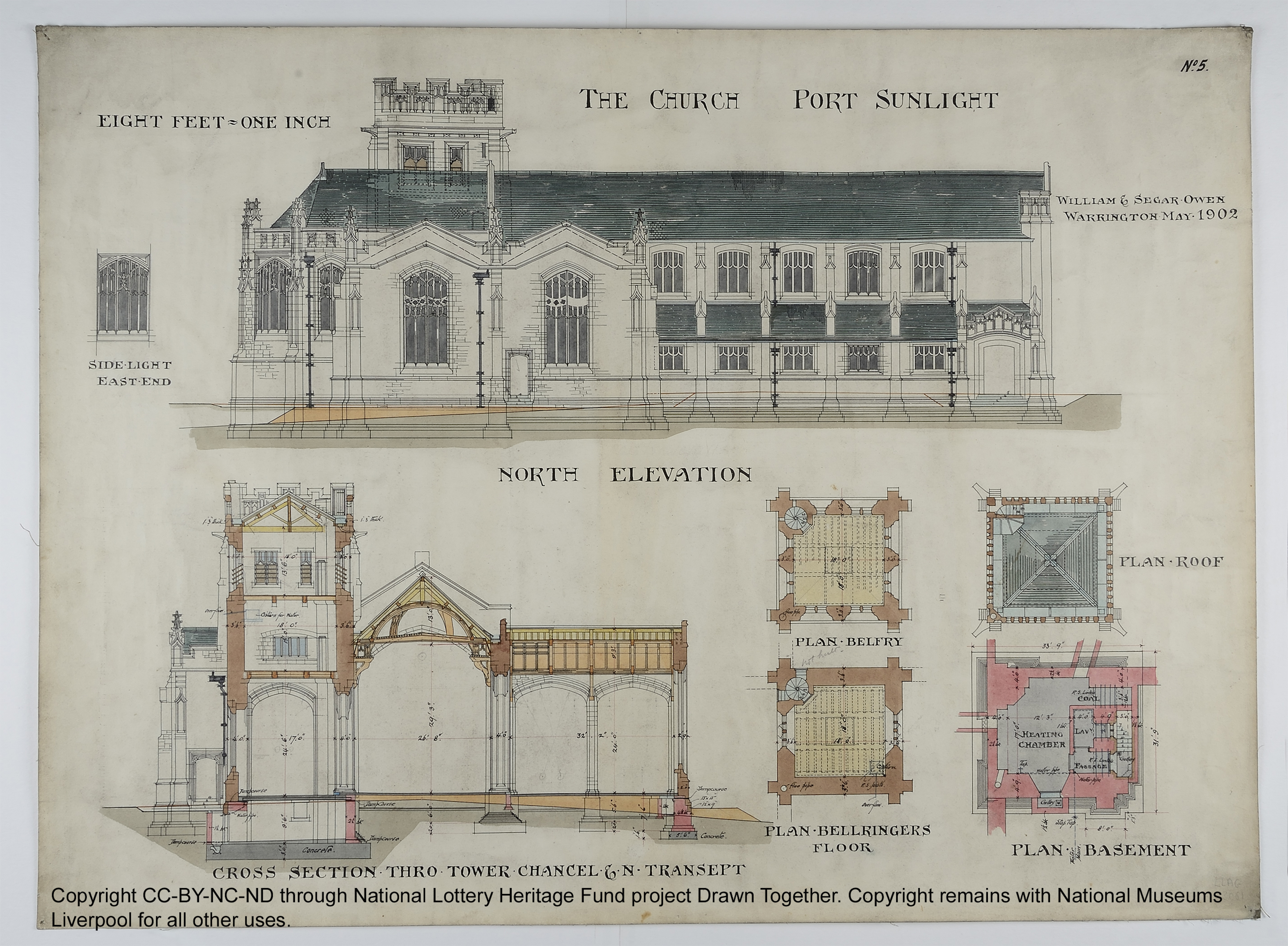
Architectural Description from National Heritage List Text Entries, © Historic England 2021.
Congregational, now United Reformed Church. 1904, Lady Lever Memorial, now Lever family vault, 1914. By William and Segar Owen. Stone with stone slate roof. Nave, aisles under lean-to roof, chancel, double north transept (ritual N is actual NE), south transept and south east tower. Lever Memorial forms loggia at west end. 6-bay nave has aisles with sill courses; raking buttresses projecting through eaves with coping and clerestory buttresses. 3-light windows with free Perpendicular tracery, straight-headed to aisles, segmental-headed to clerestory. South-west gabled porch with segmental-headed entrance recess, buttresses and panelled gable. West end has north and south canted projections with parapet; window is 4-centred, of 9 lights with 2 buttressed and pinnacled mullions. Transepts have panelled gabled set-back buttresses with pinnacles. Segmental-pointed windows of 4 lights to north and south, with king mullion. South transept has entrance with cusped head. Tower has set back buttresses and spouts, cornice and traceried embattled parapet. Entrance with cusped head and 2-light window to south, paired 2-light windows with 4-light window above to east. Bell stage has paired 2-light louvred bell openings. Chancel is canted with segmental-pointed windows of 2:5:6:5:2-lights, the east window with 2 buttressed, pinnacled mullions. Panelled buttresses and parapet. Lady Lever Memorial of 3 bays, richly decorated with buttresses and pinnacles; canted angles with niches. 4-centred arches with foliate spandrels, that to centre has panelling and niche, flanking canted projections with cusped ogee hoods to arches below. Embattled parapet. Interior has tieceron vault with rich bosses. Chest tomb of Lord and Lady Leverhulme has bronze figures by W. Goscombe John. INTERIOR has simple arcading. Tie-beam roofs. Furnishings by Hatch. Square font and square base to canted stone pulpit. Organ, by Henry Willis II, with Swell box in the North Transept, and Solo, Choir and Great divisions in the Chancel. The organ is believed to be the only extant large instrument by Willis II in its original condition, and is still fully pneumatic.